


Security is not a feature. It’s a responsibility.
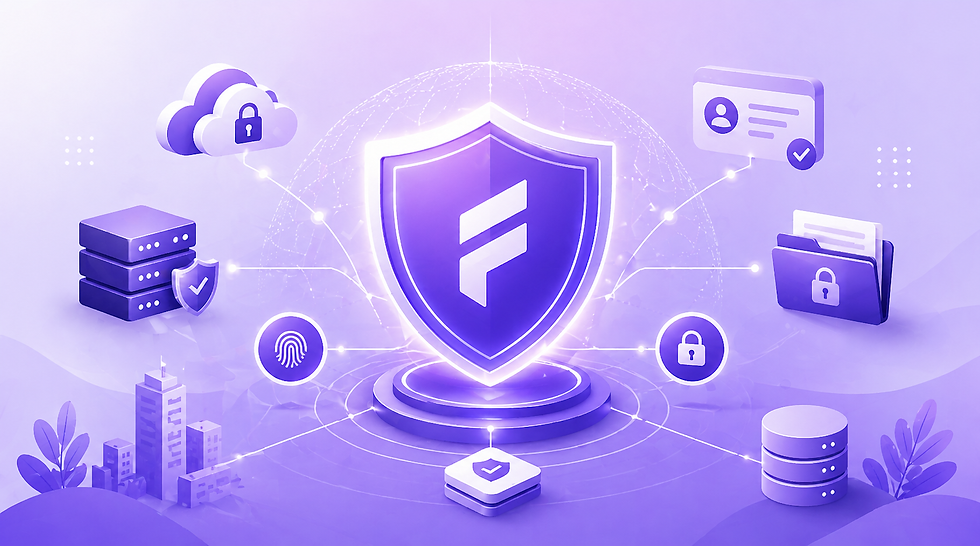
At Forescribe, we believe software governance only works when the platform itself is built to earn trust. That means security cannot sit on the sidelines. It has to be part of how we design, build, deploy, and operate everything we ship. Our current Security Policy reflects that approach clearly: we align our controls with global standards including ISO/IEC 27001, SOC 2 Type II, NIST Cybersecurity Framework, GDPR, DPDP, and CCPA, and we maintain data processing locations in the U.S., U.K., and India to support regional sovereignty requirements.
Security Built Into the Product, Not Added Later
We run Forescribe with a zero-trust mindset and least-privilege access by default. That means access is role-based, separation of duties is enforced, and access reviews happen on a quarterly basis. For privileged users, multi-factor authentication is mandatory, and secure authentication is supported through SSO as well as OAuth 2.0 and SAML 2.0. We also log authentication events, access changes, and privilege escalations so activity can be continuously monitored.
That same discipline carries into the way we protect data. We encrypt data in transit with TLS 1.2+ and AES-256 with Perfect Forward Secrecy, and we encrypt sensitive data at rest using AES-256. Encryption keys are managed through secure key management systems with automated rotation, strict access control, and audit logging. Customer data is logically segregated, so one workspace cannot cross into another.
A Secure Platform Needs a Secure Development Process
Strong security is not just about who can log in. It is also about how the software is built. Our secure development lifecycle includes secure coding practices, peer code reviews, automated static analysis, dependency scanning, and threat modeling during design. We also integrate SAST and DAST into our CI/CD pipelines and run periodic penetration tests with external security firms.
That matters because it helps us catch issues early, before they become customer problems. Security is not treated as a checkpoint at the end. It is part of the build process from the beginning.
Your Data Stays Where It Should
For enterprise teams, data location is not a small detail. It is often a requirement. Forescribe supports regional data residency in the U.S., U.K., and India, and customer data is stored in hardened Tier 4 environments managed by compliant cloud providers such as AWS, GCP, or Azure. Backups are encrypted, stored across multiple availability zones, and retained according to customer agreements and applicable regulations. Secure deletion follows NIST SP 800-88 wipe protocols.
This is the kind of flexibility modern customers need. Some organizations care about compliance. Others care about sovereignty. Many care about both. Our approach is built to support those realities instead of forcing teams into a one-size-fits-all setup.
Monitoring, Response, and Continuity
Security is only useful if it is actively maintained. That is why we operate 24x7x365 monitoring with SIEM integration, intrusion detection and prevention, endpoint protection, anomaly detection, and on-call response for high-severity alerts. Our incident response process follows a defined lifecycle: detect, contain, eradicate, recover, and review.
We also build for continuity. Our business continuity and disaster recovery framework includes redundant systems across the U.S., U.K., and India, weekly restore testing, defined RPO and RTO targets, and semi-annual DR drills. In practice, that means we are not just focused on protecting data—we are also focused on keeping the platform dependable when teams need it most.
Trust Is Part of the Process
We know that security is not only a technical decision. It is a process decision. It affects onboarding, access control, vendor review, auditing, legal review, and how confidently teams can adopt a platform. That is why we publish security and compliance information through our Security policy and Trust Center, and why we keep those controls visible rather than hidden.
For customers, that means Forescribe is designed to be easier to approve, easier to trust, and easier to operate inside enterprise environments. For us, that is not an add-on. It is part of the product.
Built to Protect What Matters Most
Software governance only creates value when the underlying platform is secure enough for teams to rely on it. At Forescribe, we are committed to protecting customer data, reducing risk, and building process discipline into every layer of the product. From authentication and encryption to monitoring, recovery, and regional data choice, our approach is designed to help customers move faster without losing control.
Because when you trust the platform, you can trust the decisions it helps you make.


Comments